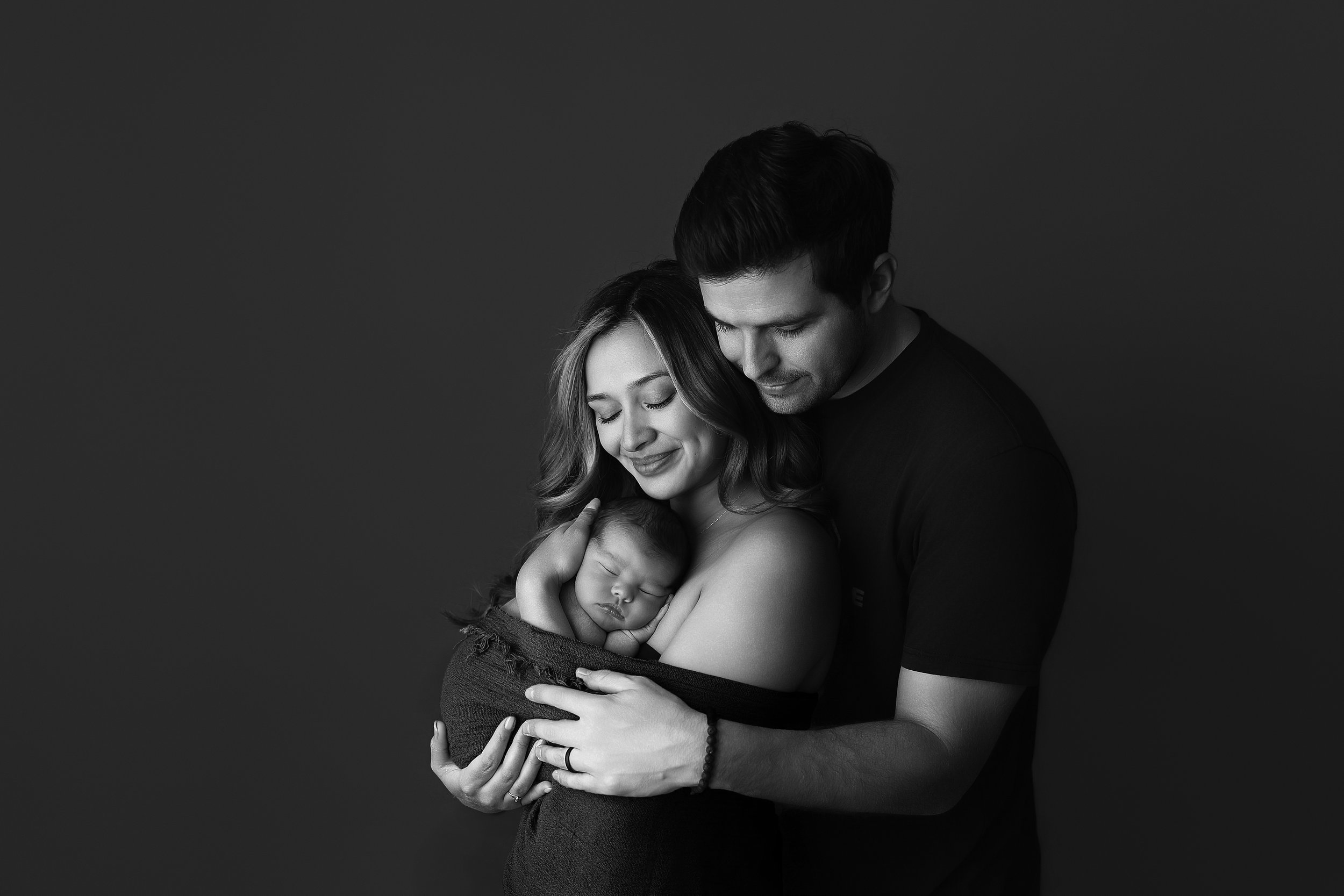
A Complete Beginner's Guide
Where to Start With
Newborn Photography
Before props, poses, or elaborate setups — learn what truly matters when working with life's tiniest and most precious subjects.
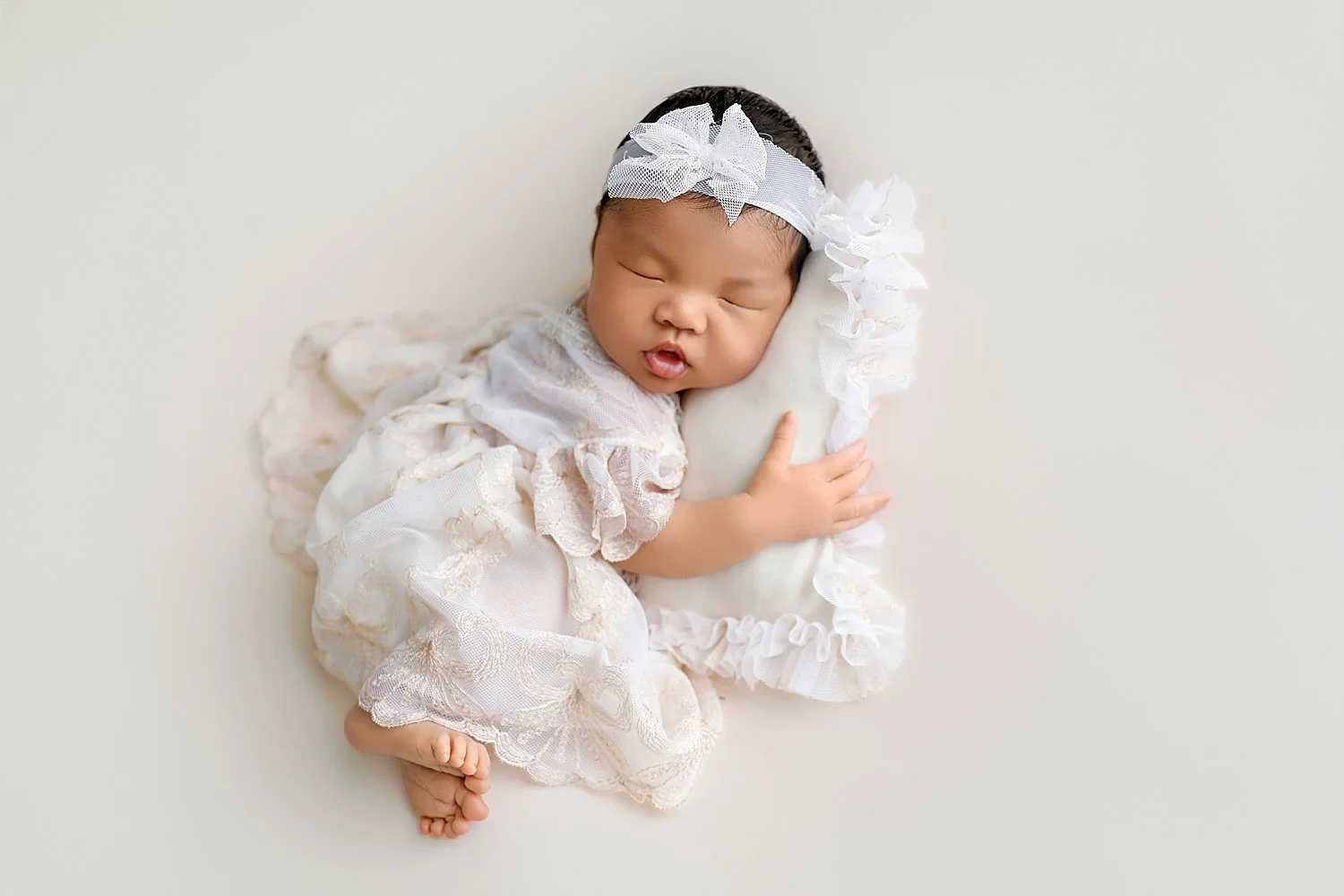
"Newborn photography is a blend of artistry, patience, and deep care — and everyone starts exactly where you are now."
Experience
Always Safety
Foundation
Safety Comes
Before Everything
A great photograph is never worth risking a baby's safety. Before you learn a single pose, you must deeply understand the tiny person in front of you.
Head & Neck Support
A newborn cannot hold up their own head. The muscles and vertebrae supporting the neck are still developing — every pose, every transition, every prop placement must factor this in without exception.
Joint & Hip Fragility
Hips, knees, and ankles are held together largely by developing cartilage and ligaments. Never force a pose that causes resistance. If a baby pushes back — stop immediately. Their resistance is communication.
Circulation Cues
Newborn circulatory systems are still maturing. Purple, blue, or extremely pale fingertips or toes mean: reposition now. Learn to read these visual signals constantly throughout every session.
Temperature Regulation
Newborns can't regulate their own body temperature. Studios should sit around 75–80°F — but overheating is equally dangerous. Watch for flushed cheeks, rapid breathing, or sweating and adjust immediately.
Immune Vulnerability
A newborn's immune system is in its earliest stages. Your studio, props, and every surface the baby touches must be clean and sanitized between sessions. Freshly laundered fabrics are standard practice — not optional.
Your Own Health
If you are sick — reschedule. No session is worth exposing a days-old infant to illness. This should be written into your client contracts and communicated clearly at booking.
"Knowledge + patience = calm sessions and confident parents."
The Foundation of Every Great Newborn Session
Camera Mastery
Learn Your Gear
Before the Baby
When you're with a newborn, your full attention must be on the baby. Fumbling with settings in that moment is not an option.
Exposure Triangle
Know how aperture, shutter speed, and ISO interact intuitively. In a session, the light shifts, the baby moves — you won't have time to think.
Focus Systems
Understand single-point, zone, and eye-detection autofocus. Newborns have tiny features — a soft eye or blurred nose can ruin an otherwise beautiful frame.
White Balance & Skin Tones
Color accuracy matters enormously. Skin tones are one of the hardest things to nail and the first thing clients notice. Shoot RAW and master correction in post.
Lens Selection
A versatile zoom like a 24–70mm is an excellent all-in-one choice for newborn work — it covers everything from environmental context to intimate detail shots without switching glass. Fixed primes are wonderful too, and both approaches work beautifully. Not sure what's right for you? Rent before you buy. Getting hands-on time with a lens before committing is always time well spent.
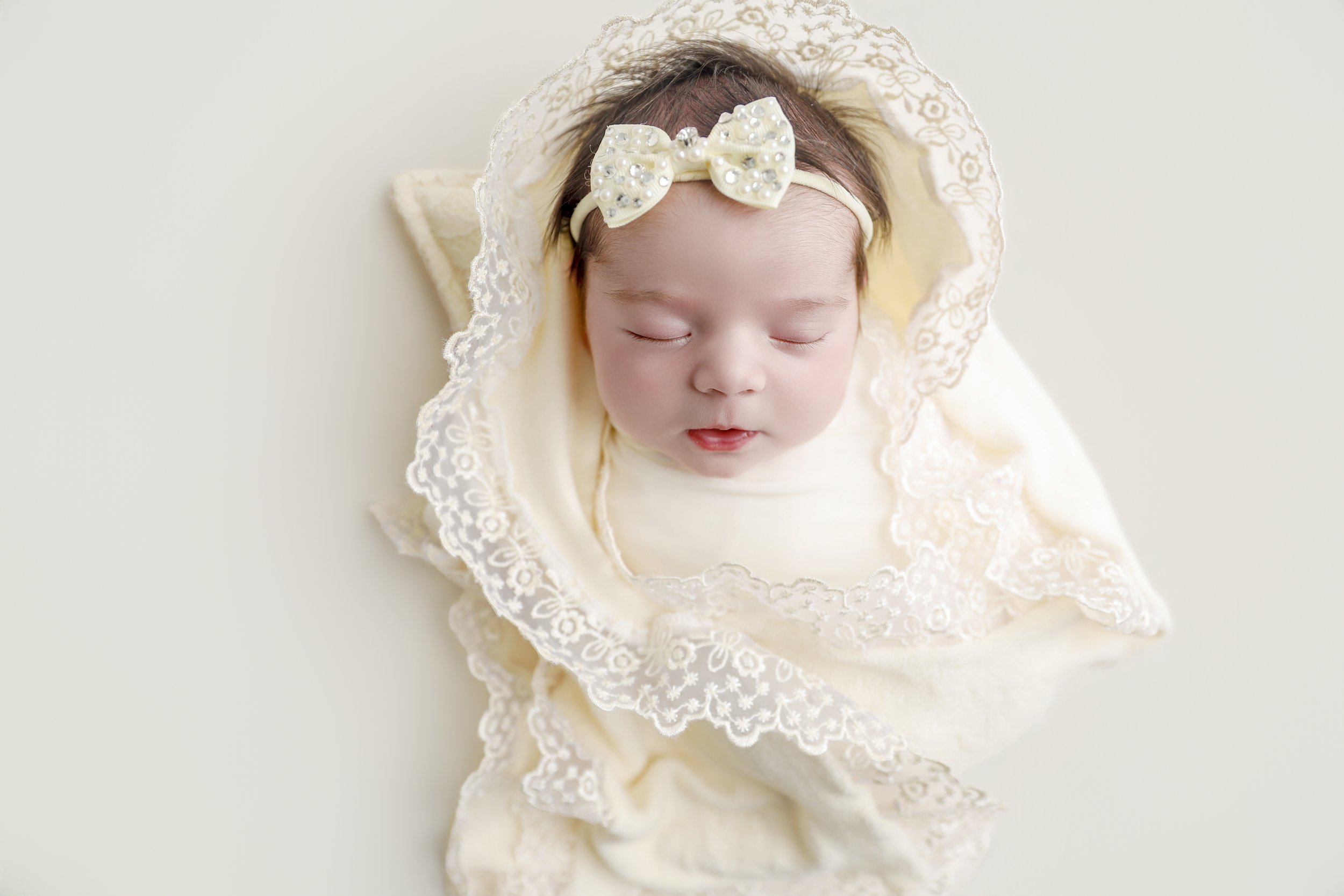

Learning Path
The Case for In-Person Learning
There is no substitute for watching a real session unfold in real time. In-person workshops collapse years of solo trial-and-error into days of focused, immersive education.
Watching an experienced photographer confidently move, transition, and reposition a sleeping baby — while narrating what they're doing and why — builds physical intuition that sticks differently than any video tutorial.
Being in the room lets you see how light falls off, how reflectors change shadows, and how the position of a window shifts everything depending on time of day. You can walk around the setup and see cause and effect immediately.
Four-day immersive academies are particularly powerful. Day one feels overwhelming; by day four, it starts to feel natural.
Alternative Path
Online Learning Done Right
Not everyone can travel to an in-person workshop right away — and that's completely fine. Online education has become genuinely excellent, and the ability to pause, rewind, and re-watch a lesson is a real advantage when building new skills.
The key is structure. Don't skip to what looks most exciting. Start with safety and handling, then move to camera and light fundamentals, then posing and workflow, and finally business and editing.
A photographer who can't safely and beautifully photograph a baby won't be saved by great marketing — so invest in the foundations first, and let everything else build on top.
Reading the Baby
Baby Cues: Your
Most Valuable Skill
The most technically skilled photographer will still have difficult sessions if they don't understand how to read and respond to a baby's signals.
Hunger Cues
Rooting (turning the head and opening the mouth), sucking on fingers, and restlessness are all early hunger signs. A hungry baby will not stay asleep. Always advise parents to feed the baby upon arrival so they come in comfortable and ready to settle.
Overstimulation
Yawning, hiccuping, sneezing, and glazed eyes indicate a baby who is overstimulated or exhausted. When you see these cues, slow down. Stop transitioning poses. Let the baby settle before continuing.
Discomfort Signals
A stiff, arching body, clenched fists, or sudden crying is the baby saying something is wrong. Stop the pose immediately. Check for hair tourniquets — a strand of hair can wrap around a tiny finger and cut off circulation — and soothe before trying again.
Contentment Cues
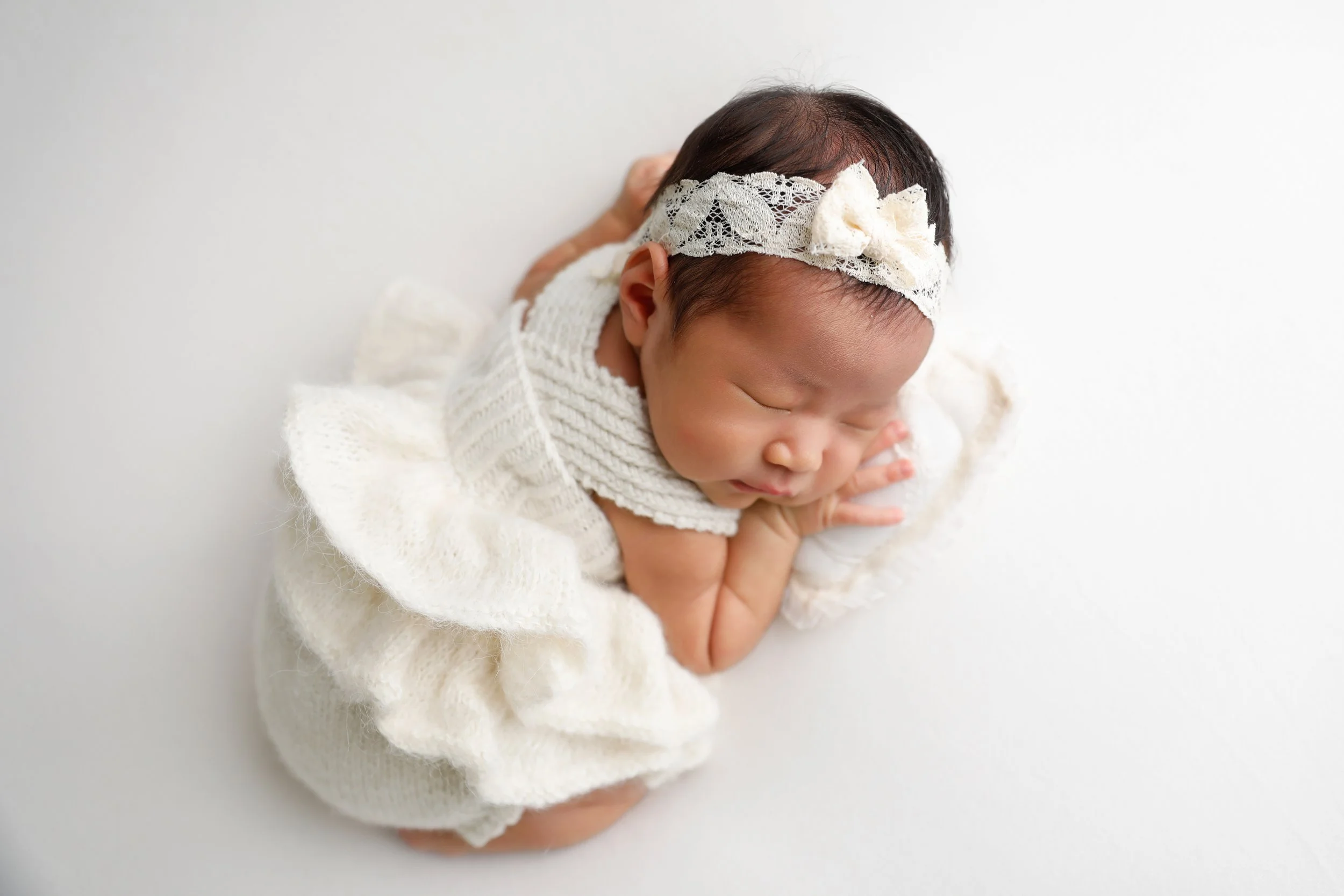
A deeply sleeping baby with relaxed hands, slightly open lips, and even breathing is telling you the session is going well. These are your windows for posing. Move slowly, deliberately, and quietly — this is your golden moment.
Studio Essentials
Props Without Overspending
Beautiful newborn photography requires very little in the way of props. What it requires is quality over quantity — and the restraint to start small.
Quality Wraps
A small collection of stretch wraps in neutral tones — cream, warm white, soft gray, dusty mauve. Learn to wrap well. A beautifully wrapped baby in a simple wrap is more elegant than any fussy setup.
Bean Bag
The workhorse of every newborn studio. Non-negotiable. Add one simple wooden bowl or basket for variety — that's truly all you need to start.
Textured Fabrics
Chunky knit blankets, delicate cheesecloth, and layered fabric pieces add visual warmth and depth to your images without complexity.
Specialty Props
Headbands, floral wraps, holiday-specific items — all of these can come later, once you know your style and understand what your clients are actually requesting.
Client Experience
Communicating
With Parents
Your work begins well before the camera comes out. The way you communicate shapes their entire experience — and whether they refer others to you.
Pre-Session Consultation
Contact families at least a week before. Let them know they're welcome to come in comfortable clothing — there's no need to dress up. Simply ask that they feed the baby upon arrival so the little one comes in full and ready to settle.
Set the Pace Expectation
Tell parents clearly at the start: the baby sets the pace. There is no rushing. This single communication removes enormous anxiety from parents who feel they need to "perform."
Be Honest About Your Experience
If you're new, say so — but frame it right. Tell parents safety is your absolute top priority and you'll take your time. Most parents appreciate honesty far more than false confidence.
Narrate During the Session
Say what you're doing out loud: "I'm going to gently move her hand now — keep watching her face, she's doing beautifully." This builds trust and keeps parents engaged rather than anxious.
Follow Up Afterward
Send a thank-you message with a realistic gallery timeline. Clear communication after the session is just as important as before it.
Keep Growing
Want to Learn More?
Whether you learn best online, in person, surrounded by a community of creatives, or you're ready to stock your studio — there's a resource designed for exactly where you are right now.
Online · 24/7 Access
Belly Baby School
Study at your own pace with full access to courses covering everything from newborn safety and posing to editing, marketing, and running a photography business. Watch, rewatch, and grow on your own schedule.
In Person · All Skill Levels
4-Day Academy Intensive
Immerse yourself in newborn photography for four full days. Designed for photographers at every level — from those just starting out to seasoned pros looking to refine and perfect their craft. Hands-on, transformative, and unforgettable.
Visit anabrandteducation.comCommunity · Live Events
Belly Baby Summit
Connect with other photographers and creatives at our live summits. A space to be inspired, learn from industry leaders, build genuine friendships, and find your people in this industry. Community changes everything.
Visit thebellybabysummitlive.comShop · Wraps & Outfits
Shop Ana Brandt
Browse our collection of wraps, outfits, and fabrics designed specifically for newborn photographers. Every piece is made with the baby's comfort and your images in mind — beautiful, functional, and built to last session after session.
Visit shopanabrandt.comCommunity · Free to Join
Join Our Facebook Group
Connect with thousands of newborn and maternity photographers in our free Facebook community. Ask questions, share your work, get feedback, and find encouragement from photographers who truly understand this journey.
Join the groupFinal Thoughts
Take Your Time.
Respect the Work.
Newborn photography is one of the most meaningful things a photographer can do. You are documenting the first days of a person's existence — the beginning of a family's new chapter. That weight is worth treating with reverence.
Go slowly. Learn safety first and technique second. Build your gear collection deliberately. Seek out mentors who prioritize safety. Practice endlessly. And when you're with a baby — be fully present, patient, and attuned.
The artistry will develop with time. The habits you build now will define your career.
— The Foundation of Great Newborn Photography