
Both of these used to be my evening. One of them now runs on a timer. The other runs on a sentence. Neither of them is a robot taking over my photography — they just do the part that was never photography in the first place.
I have been shooting since 1999 and teaching since 2008, and I have always had the same bottleneck. It is never the session. It is everything that happens between the session and the client actually holding her pictures.
Somebody picks their favorites. I find out when I happen to check my email. Then I go into the gallery, download what they chose, make a folder, name it, and only then do I get to the part I am good at. After the editing there is another round of it: export, resize, upload, name, pick a cover, send.
That middle part is where my evenings went. So I handed both ends of it over.
One: the folder is made before I know they picked
This one runs on a schedule, every hour, whether I am at the studio, teaching, or asleep. It checks whether any client has chosen their images. If somebody has, it goes into ShootProof, pulls down exactly the files they marked, and makes them a folder.
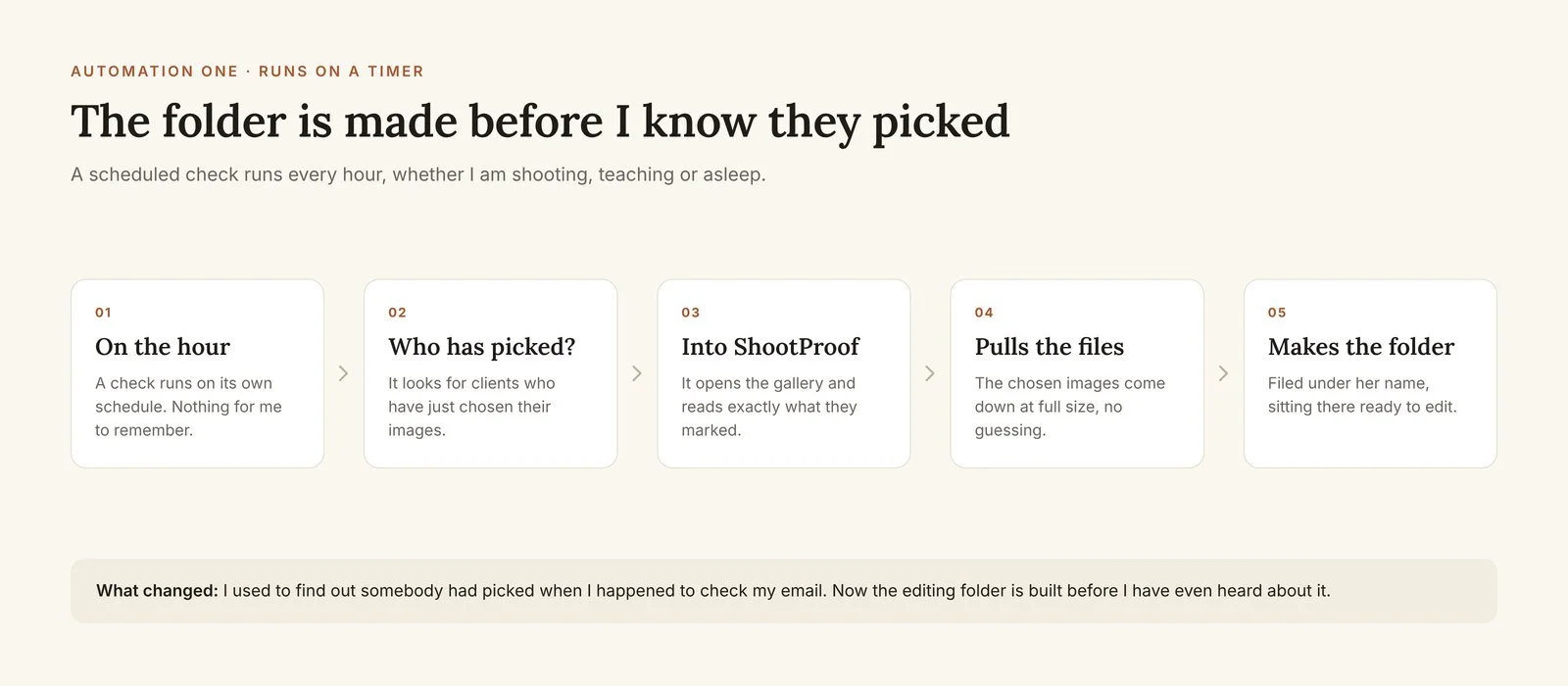
Nothing about that is clever. That is the point. It is the most boring hour of my week, done on repeat, by something that does not get bored and does not forget.
What it changed is smaller than you would think and bigger than it sounds: I no longer hold a list in my head. I do not have to remember who is waiting on me. The editing folder is sitting there with her name on it before I have even heard she picked.
Two: the album builds itself
This is the one I am most excited about, because it is the end of the chain — the part the client actually sees.
When I finish editing a session, the finals go into that client's folder, exactly the way they always have. Then I say one line: “Nina's gallery is done.” That is the whole instruction.
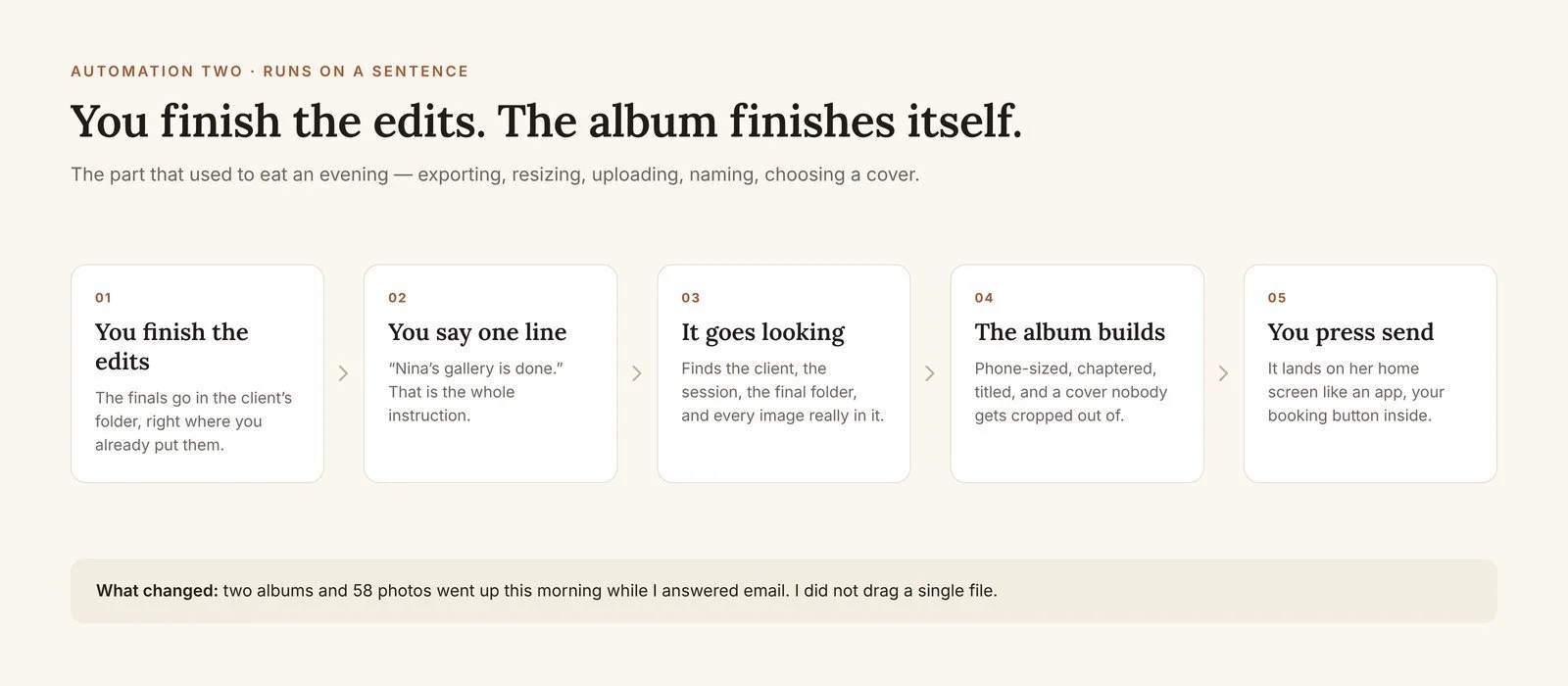
From there it finds the client folder, works out which final folder is the current one, counts what is really in there, sizes every image down for a phone, and builds the album in The Little Album — title, the note on the cover, the session type, the lot.
The bits I thought it would get wrong
Two things I honestly expected to have to fix by hand, and did not.
Chapters. One of my clients had two sessions to deliver: her daughter's third birthday, and Santa. Those are not two albums. That is one album, two chapters, so the family keeps one icon on their phone all year and the newest session opens first.
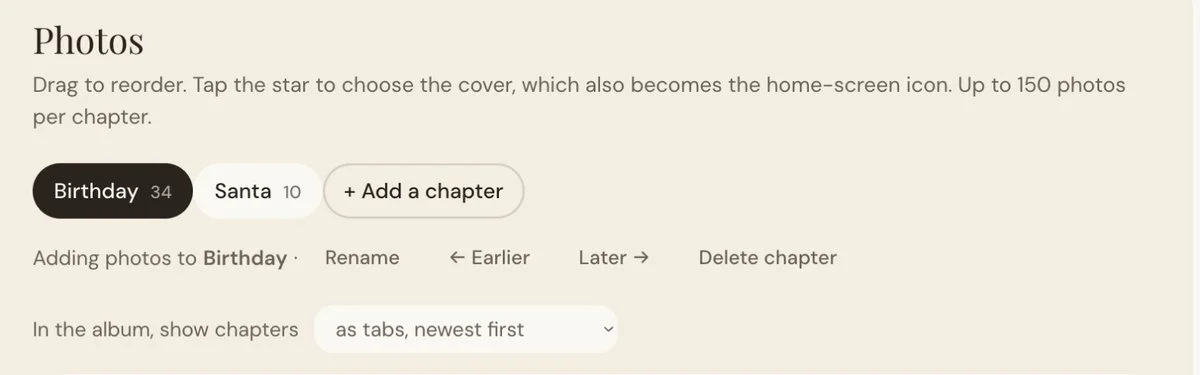
The cover. This is the one that matters and the one people get wrong. The cover photo is also the home-screen icon, and that icon is a square crop. Put a wide family shot there and you lose the people standing at the edges.

So before anything was set, every candidate got square-cropped and actually looked at. For the family session it kept the shot where all five of them and the dog still sit inside the square. For the birthday album it skipped the first frame — three children, two of whom would have been cropped away — and used a centered portrait of the birthday girl instead.
Why I care about this more than the time
Saving an evening is nice. That is not the reason.
The reason is that this is the last thing my client touches, and it is the thing she shows people. It lives on her home screen next to her messages and her camera. Her baby is the app icon. It works without wifi, so it opens at the doctor's office and at her mother's kitchen table.

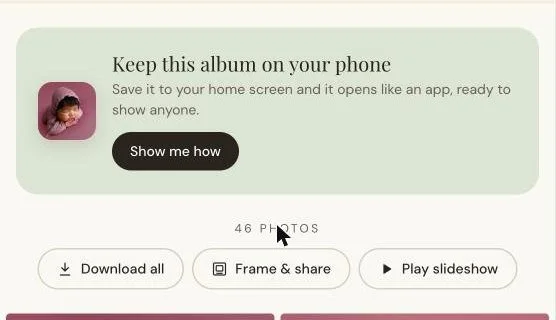
When that experience depends on me having the energy to do it at eleven at night, some clients get it and some do not. When it builds itself, every client gets it. That is the difference between a nice touch and an actual standard.
And it is honest work — I still choose the images, I still edit them, I still look at the album before it goes. The last button is mine. It always will be.
Could you do this?
Yes, and that is the uncomfortable part. I am not a developer. I have been hand-coding my own sites since I was twenty-two, but none of this needed code. It needed me to describe my own workflow clearly, in plain English, one step at a time — which is a thing photographers are actually very good at, because we already think in sequences.
The hard part was not the technology. It was being specific about what I actually do.
New class · December 1
I'm teaching how to do this with Claude
How to look at your own studio, find the parts that are costing you evenings, and hand them over — automations and agents, built by you, in your own words.
- Free for All Access members
- Free for Digital Academy members
- Free if you own My Studio Books
Everyone else can register. Full information and pricing coming soon — join the wait list and you will hear first.
Class opens December 1, 2026.